
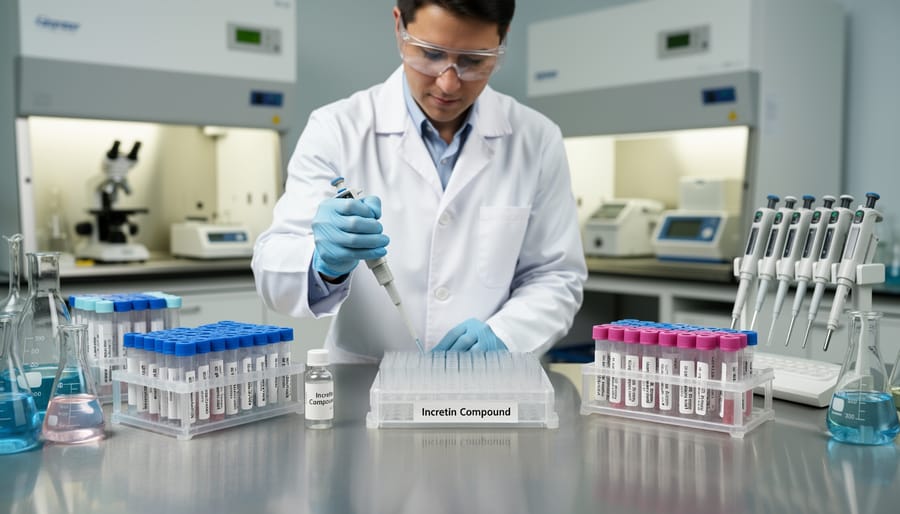
Incretin-based research compounds are laboratory molecules designed to mimic or modify the gut hormones, mainly GLP-1 and GIP, that the body releases after eating. In a lab setting, they let scientists study how these signals shape insulin release, appetite, and glucose handling in cells and animal models. Suppliers such as kylopeptides.ca list them strictly for research use, which is a line worth keeping clear: these materials are tools for investigation, not treatments, and nothing here is health advice.
Why does this matter to a community focused on cancer? Metabolism and cancer are closely linked, and researchers keep asking how hormone signalling affects tissue health, inflammation, and cell growth. If you’re still building your foundation on the disease itself, a plain-language primer on what is cancer is a good place to start.
This overview is written for laboratory readers who want clarity without the fog of jargon. We’ll explain how incretin signalling works, outline the main compound categories, and show how each is used in research. Every technical term gets a plain definition, so you can follow along whether you work at the bench or simply want to understand the science behind the headlines.
What Incretin-Based Research Compounds Mean in Plain Language
Research Use Versus Approved Medicines
A compound studied in a laboratory is simply a substance scientists are learning about. It hasn’t been proven safe or effective for people, and it hasn’t been approved to treat anything. A medication prescribed by your care team has gone through years of testing, regulatory review, and quality checks. In the United States, for example, a drug is typically studied under an Investigational New Drug (IND) application before it can be tested in people at all.
A few terms come up often in this field:
- Incretin
- A hormone released by the gut after eating that helps the body manage blood sugar and appetite.
- Receptor
- A docking point on a cell that a hormone or compound fits into, a bit like a lock waiting for its key.
- Research compound
- A substance made for laboratory study rather than for use as a treatment.
- In vitro / in vivo
- “In vitro” means studied in cells in a dish; “in vivo” means studied in a living organism.
If you have questions about your own health or treatment, please talk with your healthcare provider. They know your full story and can guide you safely.
How Incretin Signalling Works in the Body and in the Lab
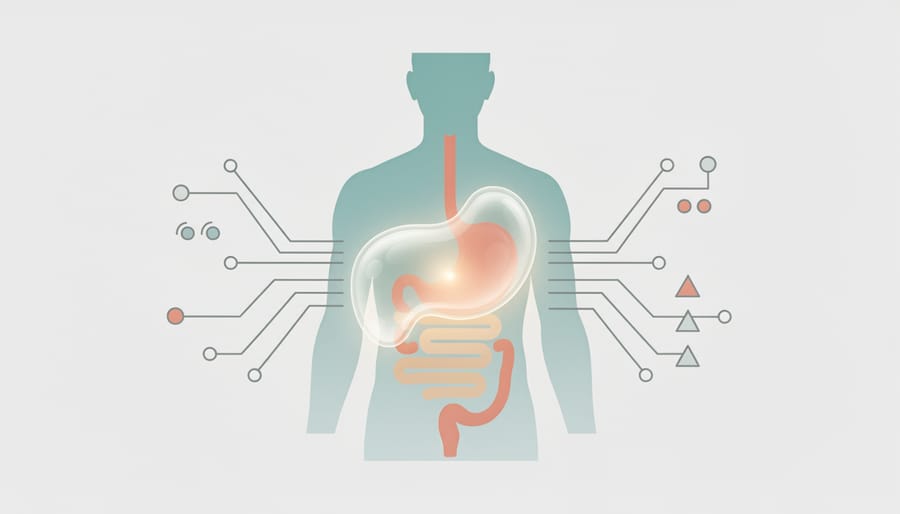
When you eat, your gut responds. Specialized cells in the intestine release hormones called incretins, which act as chemical messengers telling the rest of the body that food has arrived. The two best known are GLP-1 and GIP, and together they help coordinate how the body handles sugar and fullness after a meal.
Think of each hormone as a key and each receptor, a docking site on the surface of a cell, as a lock. When the right key fits, the lock turns and the cell receives a message. Here is how that plays out, step by step:
1. Food reaches the intestine, and incretin hormones are released into the bloodstream.
2. The hormones travel to the pancreas and bind to their receptors there.
3. This prompts the pancreas to release insulin, the hormone that helps move sugar out of the blood and into cells.
4. Digestion slows down, so food leaves the stomach more gradually.
5. Signals reach areas of the brain involved in appetite, contributing to a feeling of fullness.
Here’s the catch. In the body, incretins don’t last long. Enzymes break them down within minutes, which is a natural way of keeping the signal brief.
That is exactly why stability becomes a central question in the laboratory. Researchers design compounds that fit the same receptors but resist being broken down, so they stay active long enough to be studied. A key that dissolves in seconds is hard to observe, while one that holds its shape lets scientists watch what the lock does over time. Designers adjust a compound’s structure to slow its breakdown and extend its activity in cells and animal models.
Understanding this basic lock-and-key process makes the rest of the field easier to follow. Whether a compound targets one receptor or several, the underlying idea is the same: recreate a natural signal in a form researchers can observe closely and learn from.
Main Types of Incretin-Based Research Compounds
When laboratory readers browse the literature, incretin-based compounds tend to fall into a few broad families. Sorting them this way is a bit like sorting keys by how many locks they open, and it makes the research far easier to follow.
- Single-receptor (GLP-1) compounds target one receptor and help researchers study how that single signal shapes insulin release, digestion speed, and appetite.
- Dual-receptor (GLP-1/GIP) compounds engage two receptors at once, letting scientists explore how the two hormone pathways work together or complement each other.
- Multi-receptor approaches reach for additional targets beyond those two, so teams can examine wider effects on metabolism and energy balance.
Each category is designed to answer a different question. A single-receptor compound offers the cleanest view of one pathway, which is why it often serves as a baseline. Dual and multi-receptor designs ask something more layered: what happens when several signals are engaged together, and do they add up or interact in unexpected ways?
Another distinction readers will notice is duration. Shorter-acting designs are broken down by the body relatively quickly, so their signal rises and fades in a short window. That can be useful when researchers want to watch a rapid response unfold. Longer-acting designs are built to resist breakdown, so they stay active for longer. This is often described as a stability question, and it shapes how an experiment is planned, including how often a compound needs to be introduced and how long effects are observed.
It helps to remember that these categories describe what a compound is built to study, not how well it works in people. Early laboratory findings are only a first step, and anyone with questions about their own care should speak with their healthcare provider.
How These Compounds Are Used in Research
When laboratory teams work with incretin-based compounds, they are usually asking a handful of focused questions. In cell studies, researchers watch how a compound engages its receptor and what happens next inside the cell. In animal studies, they look at how the body responds over time: changes in blood sugar regulation, in appetite signalling, and in how the body stores and uses energy. These are careful, step-by-step observations, and each one adds a small piece to a larger picture.
There is also growing scientific interest in how metabolic health connects to cancer. Researchers are curious about how factors like weight, insulin signalling, and blood sugar balance might relate to cancer risk, to how well people tolerate treatment, and to life after treatment. Incretin-based compounds give laboratories a way to explore these links under controlled conditions. That work sits alongside basic cancer research, which focuses on understanding how cancer begins and behaves at the cellular level, and it can also inform wider conversations about cancer prevention.
Canada has a proud place in this story. Canadian scientists have contributed to diabetes and metabolic science for generations, and researchers at universities and hospitals across the country continue to carry that tradition forward. Many of them work closely with patient and survivor communities, which keeps the research grounded in real-life needs.
It helps to keep the pace of science in perspective. An early laboratory finding is only the first step. Many stages of careful study, review, and oversight come before anything could ever reach patients, and most ideas do not make that journey. That patience is part of what makes the science trustworthy.
Handling, Quality, and Responsible Research Practices
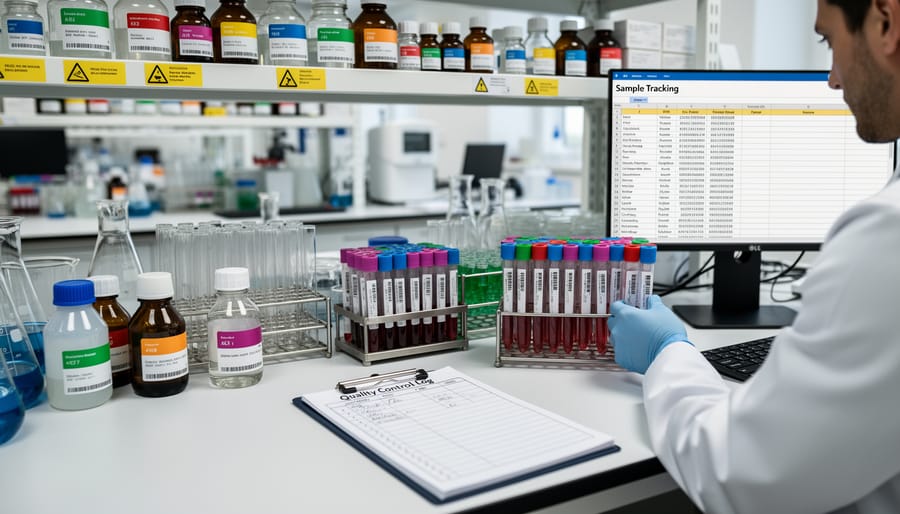
Careful science starts with careful handling. In a laboratory, quality isn’t a formality. It protects the people who may one day benefit from the work, so researchers treat it with real respect.
Good practice usually begins with confirming what a compound actually is and how pure it is before any experiment starts. From there, proper storage and clear labelling keep materials identifiable and stable, and institutional ethics and safety oversight keep the work accountable. Research materials also stay completely separate from anything meant for personal use. They exist to answer scientific questions, not to be taken home.
Behind every study are participants, patients, and families whose trust makes research possible, and that trust is worth honouring in even the smallest routines.
Are research compounds the same as prescription medicines?
No. Research compounds are made for laboratory study, while prescription medicines go through extensive review and are directed by a healthcare provider.
Why does purity matter?
Impurities can change how a compound behaves, which makes results harder to trust. Confirming purity helps keep findings reliable and comparable.
Can patients use research compounds?
Research compounds aren’t intended for personal use. Anyone with questions about their own care should speak with their healthcare team.
Where can patients and families find trustworthy information about metabolic health and cancer?
Your care team is the best starting point, and they can point you to reliable patient resources. Established cancer organizations in Canada also offer plain-language guidance.
Incretin-based research compounds are, at heart, laboratory tools. They help scientists understand how the body regulates blood sugar, appetite, and metabolism, and that knowledge builds slowly, one careful study at a time. Understanding this science can feel empowering, but it’s only one small piece of a much bigger picture.
If you’re reading this as someone living with cancer, a caregiver, or a family member, please lean on your care team for decisions about your own health. Research compounds are not treatments, and your doctors, nurses, and pharmacists know your situation best.
Our community thrives when it stays informed and hopeful, and when Canadian research and education reach the people who need them. If you’d like to learn more programs that support patients, families, and researchers across the country, we encourage you to explore them. Curiosity, paired with good guidance, is a wonderful place to begin.