
Understanding your breast cancer risk starts with one essential truth: most cases arise from a combination of factors you can’t control, age and sex, and a smaller set of lifestyle and environmental influences you can modify. If you’re a woman over 50, you already carry the two most significant risk factors. That doesn’t mean breast cancer is inevitable, but it does mean regular screening and awareness of your personal risk profile become non-negotiable tools for early detection and better outcomes.
The quickest way to assess your immediate risk is to ask three questions. Are you over 40? Do you have a close blood relative who had breast or ovarian cancer? Have you noticed any changes in your breasts, lumps, skin dimpling, or unusual discharge? A yes to any of these warrants a conversation with your healthcare provider, not panic, but prompt attention. Roughly 5 to 10 percent of breast cancers are linked to inherited gene mutations like BRCA1 and BRCA2, which dramatically elevate lifetime risk. The remaining majority develop through a complex interplay of hormonal exposure, reproductive history, lifestyle choices like alcohol consumption and physical inactivity, and factors still being mapped by Canadian researchers.
This guide walks you through the full spectrum of causes and risk factors, from the genetics you inherit to the daily habits you shape. You’ll learn how to interpret your personal risk, which factors you can influence, and when genetic counseling or enhanced screening makes sense. Early knowledge creates earlier options. For many women and a small percentage of men, understanding risk transforms anxiety into informed action.
Understanding Your Breast Cancer Risk: Which Factors Matter Most?
When you’re trying to understand your breast cancer risk, it helps to think of risk factors as pieces of information rather than predictions. Some factors carry more weight than others, and knowing which ones apply to you can guide smarter decisions about screening and prevention without causing unnecessary worry.
Risk factors fall into two broad categories: those you can’t change (like your age, family history, and genetics) and those you can influence (like physical activity, alcohol intake, and weight). The non-modifiable factors often carry the most statistical weight. For example, simply being a woman over 50 puts you at higher risk than most lifestyle factors combined. A family history of breast cancer in a first-degree relative (mother, sister, daughter) approximately doubles your risk, while inheriting a BRCA1 or BRCA2 gene mutation can raise it five to ten times higher than average.
But here’s what those numbers don’t tell you: risk isn’t destiny. A higher risk percentage means you’re more likely than someone without that factor, not that cancer is inevitable. Most women with multiple risk factors never develop breast cancer. Conversely, many who are diagnosed have no identifiable risk factors at all.
Understanding the difference between correlation and causation matters here. Just because two things occur together doesn’t mean one causes the other. Hormone replacement therapy, for instance, is associated with a modest increase in risk, but that doesn’t mean everyone who uses it will develop cancer. The relationship is more nuanced, influenced by duration of use, type of hormones, and individual biology.
When evaluating your own risk landscape, focus first on the factors with the strongest evidence: your age, family history, genetic mutations if known, breast density, and reproductive history. These provide the most reliable baseline. Then consider modifiable factors as opportunities for incremental risk reduction. No single change will eliminate risk entirely, but several small adjustments can shift your overall profile meaningfully.
The goal isn’t to achieve zero risk, that’s impossible. It’s to understand where you stand, make informed choices about screening frequency and prevention strategies, and recognize when a conversation with your doctor might be worthwhile.
What Actually Causes Breast Cancer?
Genetic and Hereditary Factors
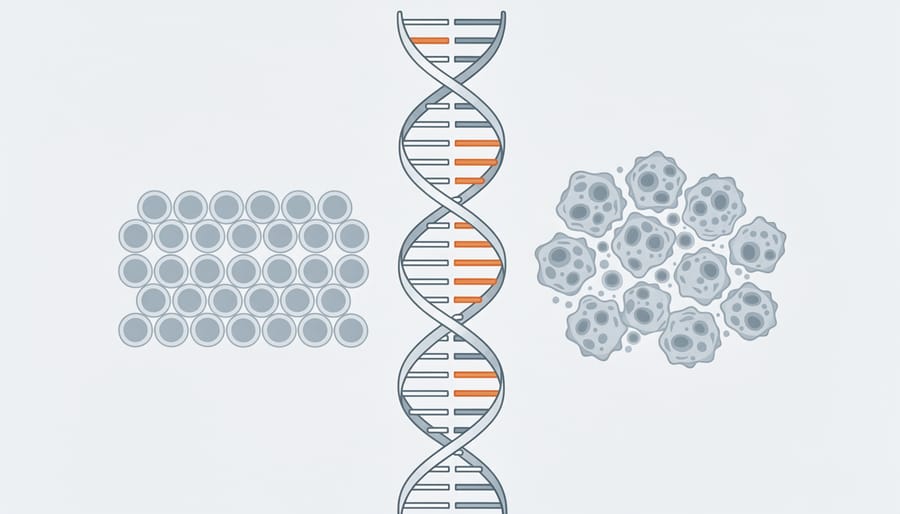
About 5 to 10 percent of breast cancers stem from gene mutations passed down through families. The most well-known are inherited BRCA changes in the BRCA1 and BRCA2 genes, which can raise lifetime breast cancer risk to as high as 70 percent. Other less common hereditary mutations, such as those in TP53, PTEN, and PALB2, also increase susceptibility.
Family history matters beyond inherited mutations. Having a first-degree relative (mother, sister, daughter) with breast cancer roughly doubles your risk, and the risk climbs further if multiple relatives were diagnosed or if cancer appeared before age 50. Patterns on either your mother’s or father’s side count equally, since genes come from both parents.
Genetic testing in Canada is available through provincial programs, typically starting with a risk assessment by your doctor or a genetic counselor. Testing can clarify whether you carry a high-risk mutation, inform screening schedules, and guide decisions about preventive surgery or medications. Most provincial health plans cover testing for those who meet certain family history criteria, though wait times vary. Knowing your genetic status empowers you to take informed steps, not to live in fear.
Hormonal and Reproductive Factors
Estrogen acts as a growth signal for many breast cells, which is why longer lifetime exposure correlates with higher cancer risk. Women who began menstruating before age twelve or reached menopause after fifty-five face slightly elevated risk because they experience more menstrual cycles overall. Similarly, reproductive history affects risk: having your first child after thirty or never having a full-term pregnancy means breast tissue spends more time exposed to unopposed estrogen.
Breastfeeding offers modest protection because it temporarily reduces estrogen levels and completes the maturation of breast cells. The longer you breastfeed, the greater the protective effect, though even a few months can help.
Hormone therapy presents a more complex picture. Combined HRT increases risk when taken for several years during or after menopause, particularly formulations pairing estrogen with progestin. Estrogen-only therapy carries a lower risk but isn’t suitable for women who still have a uterus. Most Canadian doctors now recommend using the lowest effective dose for the shortest necessary time, and many women see their risk return to baseline within a few years of stopping treatment. Understanding these patterns helps you weigh the benefits of symptom relief against long-term risk when discussing options with your healthcare provider.
Environmental and Radiation Exposure
Radiation exposure to the chest area stands as one of the few definitively proven environmental risk factors for breast cancer. Women who received radiation therapy to treat Hodgkin lymphoma, particularly during adolescence or young adulthood when breast tissue was still developing, face elevated risk decades later. The younger you were at treatment and the higher the dose, the greater the cumulative risk becomes.
Occupational exposures present a murkier picture. Certain workplace chemicals, particularly those mimicking estrogen or disrupting hormone function, show associations with breast cancer in some studies, though proving direct causation remains challenging. Shift workers exposed to prolonged artificial light at night may experience disrupted circadian rhythms that affect melatonin production, potentially influencing hormone-sensitive cancers. Canadian researchers continue investigating these occupational links, particularly in industries where women face regular exposure to solvents, pesticides, or endocrine-disrupting compounds.
Unlike radiation therapy, most everyday environmental exposures lack conclusive evidence linking them to breast cancer.
Risk Factors You Cannot Change
Some aspects of breast cancer risk lie beyond your control, and that’s not a statement of helplessness, it’s simply biology. Understanding these factors helps you and your healthcare team create a more informed screening and monitoring plan, not a cause for constant worry.
Age remains the single strongest risk factor. About two-thirds of invasive breast cancers in Canada are diagnosed in women over 55. Your risk increases as you age, with the most significant jump occurring after menopause. This doesn’t mean younger women are immune, breast cancer does occur in women in their 20s, 30s, and 40s, but the probability rises steadily with each decade.
Being biologically female significantly elevates risk. Women develop breast cancer at roughly 100 times the rate of men, primarily because female breast tissue has more cells that can become cancerous and greater exposure to estrogen and progesterone. Men do get breast cancer, accounting for about 1% of all cases in Canada, but the fundamental biological difference in breast tissue development creates this disparity.
Breast density affects both risk and detection. Dense breast tissue contains more glandular and connective tissue relative to fatty tissue. Women with very dense breasts have a moderately higher risk, and mammograms are less effective because both dense tissue and tumours appear white on imaging. If you have dense breasts, your radiologist should note this on your mammogram report, and you may benefit from supplemental screening with ultrasound or MRI.
Previous cancer history matters. If you’ve had breast cancer in one breast, your risk for developing a new cancer in the other breast increases. Similarly, certain other cancers, particularly ovarian cancer, can indicate shared genetic susceptibilities that raise breast cancer risk.
Race and ethnicity play a complex role. In Canada, white women have a slightly higher lifetime risk of developing breast cancer, but Black women are more likely to be diagnosed with aggressive subtypes at younger ages and face higher mortality rates. Indigenous women often experience later-stage diagnosis due to barriers in accessing screening. These patterns reflect a mix of genetics, biology, and systemic healthcare inequities.
| Risk Factor | Relative Impact | Recommended Monitoring |
|---|---|---|
| Age over 50 | High | Regular mammograms every 2 years (Canada); annual after 40 in some provinces |
| Dense breast tissue | Moderate | Mammogram plus possible ultrasound or MRI; discuss with radiologist |
| Personal cancer history | Moderate to High | Enhanced surveillance plan with oncologist; may include MRI |
| Family history (first-degree relative) | Moderate | Earlier or more frequent screening; consider genetic counseling |
| Gender (female) | Very High | Standard screening protocols starting at recommended age |
Knowing these factors exist doesn’t mean you should live in fear. It means you have information that can shape smarter screening decisions. A 35-year-old with dense breasts and a mother who had breast cancer at 42 needs a different monitoring plan than a 60-year-old with average density and no family history. That’s the value of understanding what you can’t change: it directs where your attention and medical resources should go.
Risk Factors You Can Influence

While some breast cancer risk factors lie beyond your control, research consistently shows that lifestyle and medical decisions can meaningfully influence your overall risk. These modifiable factors represent areas where you have agency, and small changes can compound over time. Understanding them is not about assigning blame or creating guilt if you’ve made different choices in the past; it’s about recognizing opportunities moving forward.
The evidence around modifiable risk factors is strongest for several key areas:
- Alcohol consumption: Even moderate drinking (one drink per day) increases breast cancer risk, with greater consumption raising risk proportionally.
- Physical inactivity: Sedentary lifestyles contribute to higher risk, while regular exercise appears protective, particularly for postmenopausal breast cancer.
- Excess body weight: Being overweight or obese after menopause elevates risk because fat tissue produces estrogen, increasing lifetime hormone exposure.
- Postmenopausal hormone therapy: Combined estrogen-progestin hormone replacement therapy increases risk when used for five years or longer.
- Not breastfeeding: Women who breastfeed, especially for a year or longer across multiple pregnancies, have lower breast cancer risk than those who never breastfeed.
Alcohol stands out as one of the most modifiable factors. Every additional drink per day increases risk by approximately 7-10%, according to Canadian cancer research. If you drink regularly, reducing your intake or choosing alcohol-free days creates measurable risk reduction. Weight management matters particularly after menopause, when the relationship between body fat and estrogen production becomes more pronounced. Maintaining a healthy weight through balanced eating and movement addresses multiple cancer risks simultaneously.
Physical activity offers protective benefits independent of weight. Aim for 150 minutes of moderate activity weekly, which Canadian guidelines recognize as reducing breast cancer risk by 10-20%. This doesn’t require gym memberships or intense training; brisk walking, gardening, swimming, or cycling all count.
If you’re considering hormone replacement therapy for menopausal symptoms, discuss the timing, type, and duration with your doctor. Estrogen-only formulations carry different risks than combined therapies, and lower doses for shorter periods may be appropriate for your situation. Similarly, if pregnancy is part of your life plan, breastfeeding provides protective benefits while supporting infant health.
These daily risk choices accumulate over years and decades. Starting where you are, with the factor that feels most manageable, creates momentum. You don’t need perfection; consistent, sustainable changes matter more than dramatic overhauls you can’t maintain. Every positive shift moves you toward lower risk while supporting your overall wellbeing.
Steps to Lower Your Breast Cancer Risk

While breast cancer remains one of the preventable cancers where your choices can meaningfully influence your risk, prevention isn’t about perfection. It’s about understanding how lifestyle affects risk and taking manageable steps that fit your life. The Canadian Cancer Society estimates that roughly 30% of breast cancers could be prevented through modifiable lifestyle factors, which represents thousands of Canadian women each year.
Here’s a practical roadmap to reduce your cancer risk organized as sequential actions you can take:
- Document your family health history. Write down which relatives had breast or ovarian cancer, their age at diagnosis, and whether anyone carries known genetic mutations. Share this information with your doctor during your next visit. If you have two or more close relatives with breast cancer, or one diagnosed before age 50, flag this as a priority conversation.
- Reach and maintain a healthy weight for your body. Post-menopausal women who are overweight face a 20-60% higher risk compared to those at a healthy weight. Focus on sustainable changes rather than rapid weight loss: add more vegetables to meals, reduce portion sizes gradually, and find movement you enjoy. A 5-10% weight reduction can make a measurable difference.
- Limit alcohol to no more than one drink per day, or avoid it altogether. Each additional daily drink raises your risk by roughly 7-10%. If you currently have two glasses of wine nightly, cutting back to three per week represents significant risk reduction. Many Canadian women find alternating alcoholic drinks with sparkling water helps manage social situations.
- Aim for 150 minutes of moderate activity weekly, or 75 minutes of vigorous exercise. This breaks down to 30 minutes of brisk walking five days a week. Physical activity helps regulate hormones and maintain healthy weight. Start with 10-minute walks if you’re currently inactive, then build from there.
- Follow screening guidelines appropriate for your risk level. Average-risk Canadian women should begin annual mammograms between ages 40-50, depending on provincial programs. High-risk women may need earlier screening or additional imaging like MRI. Know your breast density, as dense breasts may require supplemental screening beyond standard mammography.
- Ask your doctor about risk-reduction medications if you’re high-risk. Drugs like tamoxifen or raloxifene can reduce breast cancer risk by up to 50% in certain women, though they carry side effects. This conversation makes sense if you have a strong family history, high-risk genetic variants, or previous atypical breast biopsies.
- Pursue genetic counseling if you meet referral criteria. Most provinces offer subsidized or free genetic testing for women with significant family history or specific ancestry patterns. A genetics appointment clarifies whether inherited mutations like BRCA1 or BRCA2 are driving your family’s cancer pattern and opens access to enhanced surveillance or preventive surgeries.
These steps aren’t equally weighted for everyone. A woman with BRCA1 mutation gains more from medication and intensive screening than from modest weight loss, while someone at average risk sees the greatest benefit from lifestyle modifications. Your personal risk profile determines which actions deserve priority, which is why step one matters so much.
Canadian provinces offer different levels of access to screening and genetic services. Most provide breast cancer screening programs starting at age 50, though some begin at 40. Genetic counseling referrals typically go through family physicians or oncologists, with wait times varying from weeks to several months depending on your location and risk urgency.
When to Talk to Your Doctor About Your Risk
Certain patterns in your personal or family health history deserve a conversation with your doctor, even if you feel healthy now. Strong signals include two or more close relatives diagnosed with breast or ovarian cancer, particularly before age 50; a known BRCA1, BRCA2, or other cancer-related gene mutation in your family; previous radiation treatment to your chest before age 30; or a personal history of atypical hyperplasia, lobular carcinoma in situ, or dense breast tissue identified on mammograms. If you are of Ashkenazi Jewish descent, your risk for carrying certain mutations is higher, making family history screening especially relevant.
Your family doctor can refer you to a cancer genetics clinic or high-risk breast program available across Canada, from Toronto’s Princess Margaret Cancer Centre to BC Cancer in Vancouver. During genetic counseling, a specialist maps your family tree, estimates your lifetime risk using validated models, and discusses whether genetic testing makes sense for you. Testing involves a simple blood or saliva sample and takes a few weeks for results. Most provinces cover the cost when specific criteria are met.
Sarah, a 38-year-old from Halifax, sought genetic counseling after her mother and aunt both developed breast cancer in their forties. Her BRCA2 mutation result led to enhanced surveillance with MRI and eventually a preventive mastectomy, a choice she describes as “taking back control.” Michael, whose sister tested positive for a BRCA1 mutation, underwent counseling to understand his own risk and his daughters’ future testing options. These conversations are not about fear; they are about informed choices tailored to your life.
Common Questions About Breast Cancer Risk
Can stress cause breast cancer?
While chronic stress affects overall health and can influence behaviors like diet and sleep, there’s no direct evidence linking stress itself to causing breast cancer. Managing stress remains important for general wellbeing and helping you maintain healthy habits.
Do underwire bras increase breast cancer risk?
No. This is a persistent myth with no scientific basis. The type of bra you wear, underwire, sports bra, or no bra at all, doesn’t affect your breast cancer risk.
Does birth control increase my risk?
Current or recent use of hormonal contraceptives shows a small, temporary increase in breast cancer risk that returns to baseline about ten years after stopping. For most women, the benefits of birth control outweigh this modest risk, but discuss your personal situation with your doctor.
Can men get breast cancer?
Yes. Though rare, men develop breast cancer because they have breast tissue. Male breast cancer accounts for less than 1% of all cases, but men with BRCA2 mutations face significantly elevated risk.
Do breast implants cause cancer?
Breast implants don’t increase breast cancer risk. However, textured implants have been linked to a rare type of lymphoma called BIA-ALCL, which is not breast cancer but requires monitoring.
These questions reflect common anxieties that circulate widely, especially online. Sorting myth from reality matters because misplaced worry about negligible risks can distract from the factors that genuinely influence your odds.
Antiperspirants and deodorants don’t cause breast cancer, despite rumors about aluminum compounds. Studies examining this concern found no causal link. Similarly, there’s no evidence that caffeine, sugar, artificial sweeteners, or microwaving food in plastic containers increases your risk.
Breast cancer isn’t contagious and can’t spread from person to person through any form of contact. The disease develops from changes within your own cells, not from external transmission.
What does matter? The daily choices covered earlier in this article, maintaining a healthy weight, limiting alcohol, staying physically active, carry far more weight in your risk profile than any of these widely feared but unfounded concerns. Channel your energy toward evidence-based prevention rather than worrying about debunked myths.
How to Fix It Step by Step
Start by assessing your personal risk landscape through a conversation with your doctor. Bring a detailed family health history, including any breast, ovarian, or other cancers in close relatives, and discuss your own reproductive timeline, past radiation exposure, and lifestyle factors. This baseline risk assessment determines which prevention steps will make the biggest difference for you.
If you’re at average risk, focus on modifiable factors. Maintain a healthy weight through balanced nutrition and regular movement, since excess fat tissue produces estrogen that can fuel breast cancer growth. Limit alcohol to no more than one drink per day, as even moderate consumption increases risk. Aim for 150 minutes of moderate activity weekly; physical exercise directly lowers circulating estrogen and inflammation.
For those at elevated risk due to family history or genetic factors, ask your doctor about enhanced screening protocols. In Canada, high-risk individuals may qualify for annual MRI in addition to mammography, starting earlier than age 40. Some women with BRCA mutations consider risk-reducing medications like tamoxifen or raloxifene, which can cut risk by up to 50 percent in select cases.
Adopt a prevention mindset by staying current with screening recommendations and re-evaluating your risk profile as you age or when family history changes. Prevention is ongoing, not a one-time checklist.
Understanding the causes and risk factors for breast cancer gives you knowledge, but it doesn’t guarantee certainty. Even with all the right lifestyle choices and regular screening, some cases develop without clear explanation. That reality can feel frustrating, but it shouldn’t diminish the power of what you can control.
Prevention matters. Research shows that maintaining a healthy weight, limiting alcohol, staying active, and following screening guidelines reduces risk for many people. Early detection saves lives, mammograms and self-awareness catch cancers when they’re most treatable. These aren’t perfect shields, but they’re proven tools that shift the odds in your favour.
You don’t navigate this alone. Across Canada, cancer centres, genetic counseling services, and community organizations offer support tailored to your risk profile. The Cancer Survivors community connects thousands of Canadians who share experiences, research breakthroughs, and practical wisdom about living with or preventing cancer. Whether you’re assessing your own risk, supporting a loved one, or managing a diagnosis, these networks provide both information and solidarity.
Start where you are. Talk to your doctor about your personal risk factors. Book that overdue mammogram. Make one lifestyle adjustment that feels manageable. Knowledge paired with action creates momentum, and every step toward prevention or early detection is a step worth taking. Your health deserves that investment, and the resources to support you are within reach.